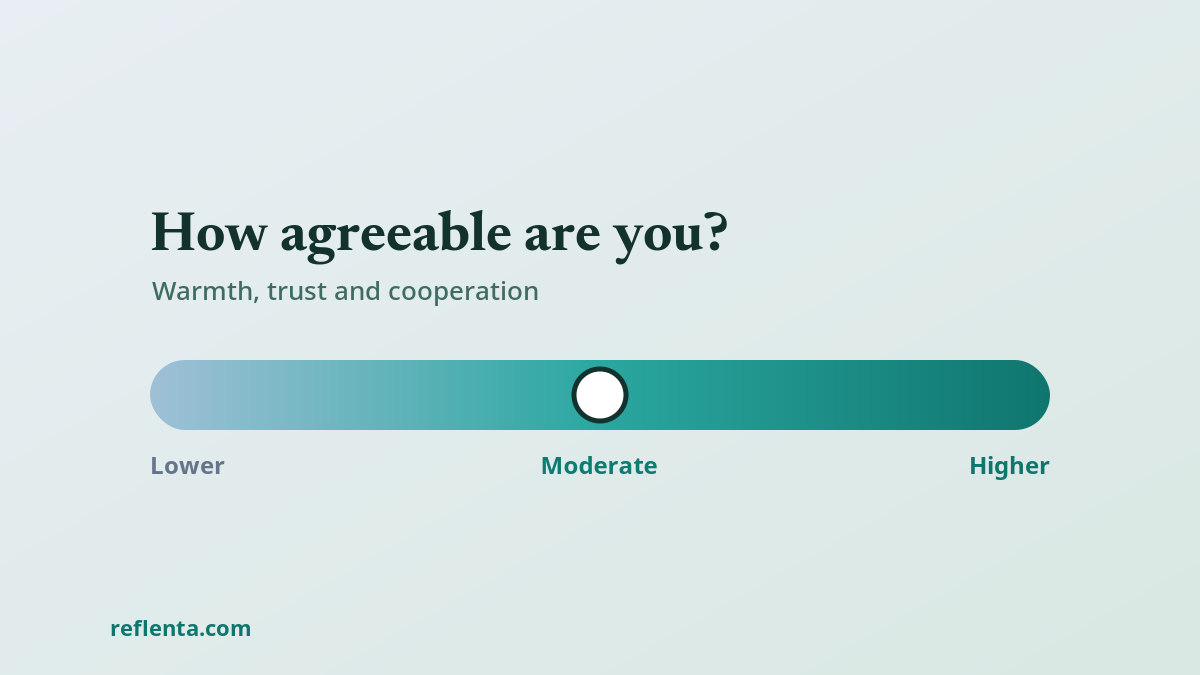
You are in a meeting. Someone suggests an idea that feels slightly off. Do you gently support the group’s consensus to keep things smooth? Or do you speak up immediately, pointing out the flaws even if it causes a brief awkward silence? That split-second decision reveals a lot about your agreeableness.
Agreeableness is one of the Big Five personality traits. It describes how warm, trusting, cooperative and considerate you tend to be toward other people. It is not about being nice all the time. It is about your default setting when dealing with others.
What Agreeableness Actually Means
This trait sits on a spectrum. It is not a binary switch. You are either agreeable or you are not. Instead, it is a continuum. Some people naturally lean toward harmony. Others lean toward directness. Both are normal. Both are valid ways to move through the world.
People high in agreeableness are compassionate, cooperative, trusting and easy to get along with. They value harmony and helping others. They often put the group’s needs before their own. They want everyone to feel included and respected. This makes them wonderful friends and supportive colleagues.
However, being high in agreeableness has its own challenges. These individuals may struggle to say no. They might stay in situations that drain them because they fear conflict. They prioritize keeping the peace over expressing their own needs. This can lead to resentment if their boundaries are not respected.
The Other End of the Spectrum
People lower in agreeableness are more skeptical, direct and competitive. They are more willing to put their own interests first and say no. They do not mind rocking the boat if it means getting to the truth. They value honesty over harmony.
This does not mean they are rude or mean. It means they prioritize efficiency and fairness. They are often good negotiators. They can make tough decisions without getting bogged down in emotional details. They are less likely to take things personally. This directness can be refreshing in high-stakes environments.
Lower agreeableness supports assertiveness, honesty and negotiation. These individuals are often seen as strong leaders. They can deliver bad news without sugarcoating it. They are less likely to be manipulated by flattery. However, they might miss out on deep emotional connections if they are too guarded.
Warm vs Competitive: Finding Your Balance
The dynamic between warm and competitive styles shapes many of our interactions. The Big Five agreeableness model helps us understand where we fall. It is not about which style is superior. It is about understanding your natural tendencies.
High agreeableness supports warm relationships. It builds trust and community. Low agreeableness drives innovation and competition. It pushes for better deals and clearer truths. Neither end is better or healthier. Your score is a snapshot of your current tendencies, not a fixed label. It is a normal trait, not a diagnosis.
If you are curious about where you stand, you can take the free agreeableness test. This tool helps you see your specific score and understand what it means for your daily life. It provides clarity without judgment.
Understanding Your Score
The test uses specific bands to categorize your results. A score of 10 to 23 indicates lower agreeableness. You are likely more skeptical and direct. You prioritize your own interests and are comfortable with conflict. You are efficient and assertive.
A score of 24 to 36 represents moderate agreeableness. You can adapt to the situation. You can be cooperative when needed but also stand your ground. You balance harmony with honesty. This flexibility is a strength in many social and professional contexts.
A score of 37 to 50 means higher agreeableness. You are likely very compassionate and trusting. You value harmony and helping others. You are easy to get along with. You prefer collaboration over competition. A higher total means more of these warm, cooperative tendencies.
What Your Results Mean for You
Your agreeableness level influences how you work, love, and live. High scorers thrive in supportive teams. Low scorers thrive in competitive markets. Both are valuable. Understanding your score helps you choose environments where you can thrive.
If you scored high, practice setting boundaries. It is okay to say no. Your needs matter just as much as others’. If you scored low, practice active listening. People may appreciate your directness, but they also need to feel heard. Small adjustments can improve your relationships significantly.
Remember that this is just one aspect of your personality. You are complex. Your agreeableness can shift depending on the context. You might be highly agreeable with your family but very competitive at work. This is normal. It shows adaptability.
To get a clearer picture of your personality, consider taking the free agreeableness test. It is a simple way to check your baseline. Use the results as a tool for self-awareness, not as a box to fit into. You are more than a number. You are a unique combination of traits that make you who you are.