You are standing in the kitchen, staring at a pile of unwashed dishes. Your partner or roommate might have already put them away, or perhaps they are still sitting there, waiting for a future version of you to deal with them. This small moment of tension or ease often comes down to one specific personality trait: conscientiousness. It is not about being good or bad. It is about how you naturally approach order, rules, and your own responsibilities.
What Conscientiousness Actually Is
Conscientiousness is one of the Big Five personality traits. It describes how organized, disciplined, careful, and dependable you tend to be. If you are someone who makes lists and actually uses them, you likely score higher in this area. If you prefer to go with the flow and ignore the calendar, you might score lower. Neither style is wrong. It is simply a way your brain handles structure.
People high in conscientiousness plan ahead. They follow through on their promises and like order. They are reliable and good at managing long-term goals. This trait helps them stay on track even when things get busy. On the other hand, people lower in conscientiousness are more flexible. They are spontaneous and relaxed about rules, routines, and tidiness. They might find strict schedules restrictive but enjoy the freedom of adapting to the moment.
How to Measure Your Self-Discipline
Understanding where you fall on this spectrum helps you know your strengths. You can find out by taking the free conscientiousness test. This tool looks at your habits and preferences to give you a clear picture of your self-discipline. The test measures how often you plan, how careful you are with details, and how well you stick to your commitments.
The results are not just a number. They show your natural tendencies. For example, a high score suggests you are likely to be the person who remembers birthdays and keeps a tidy desk. A lower score suggests you might be the one who finds creative solutions in the moment but might forget to pay a bill on time. Both approaches have value in different situations.
Understanding Your Score Bands
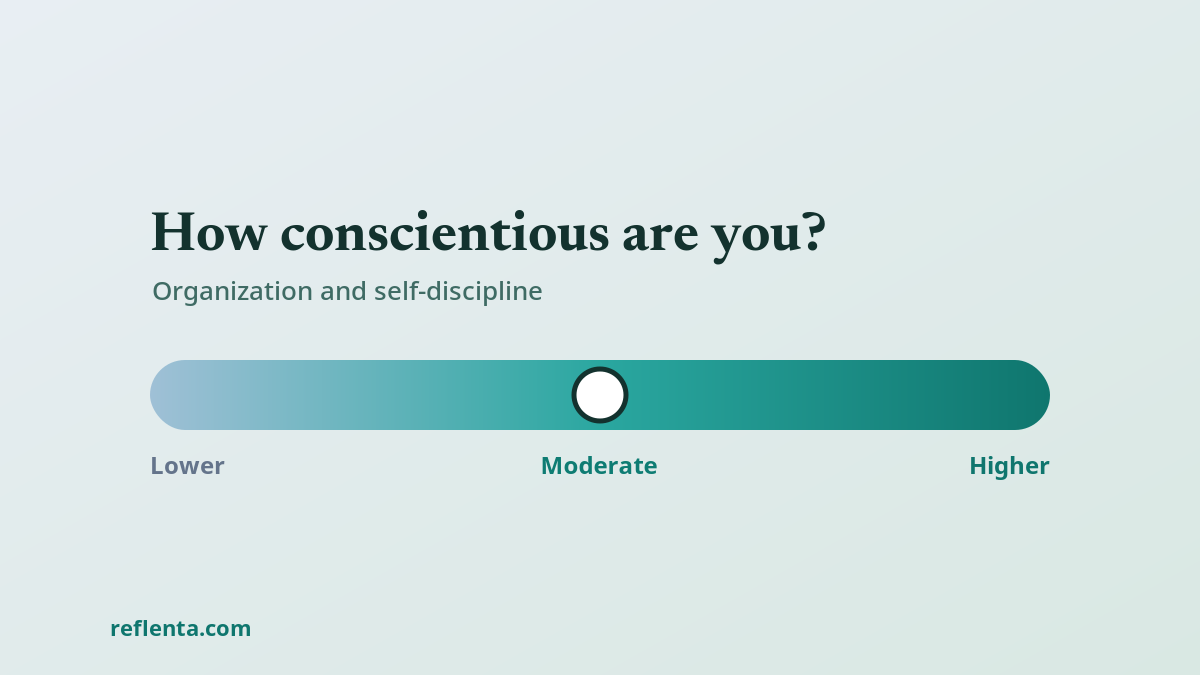
When you complete the assessment, you will receive a total score. This score places you in one of three bands. These bands help you understand your level of organization and self-discipline. The score bands used on the test are specific and easy to interpret.
If you score between 10 and 23, you have lower conscientiousness. This means you are likely more spontaneous and flexible. You might dislike rigid routines and prefer to react to events as they happen. If your score is between 24 and 36, you have moderate conscientiousness. You probably balance planning with flexibility. You might make plans but are willing to change them if something better comes up.
A score between 37 and 50 indicates higher conscientiousness. A higher total means more organization and self-discipline. You likely keep your life very structured. You are probably the friend who always arrives early and has a detailed itinerary. Knowing your band helps you predict how you will handle stress or new projects.
Big Five Conscientiousness in Daily Life
Your score in the Big Five conscientiousness category affects your work and relationships. High scorers are often seen as reliable and hardworking. They are good at long-term goals because they can delay gratification. They control their impulses to focus on the bigger picture. This makes them excellent employees and partners who can be counted on.
Lower scorers bring a different set of skills. Their flexibility allows them to adapt quickly to change. They might be more creative because they are not bound by strict rules. They are relaxed about tidiness, which can make their environment feel less sterile. In a crisis, a lower scorer might think of unconventional solutions that a highly organized person might miss. It is all about balance.
What Your Result Means for You
Your result is a self-check, not a diagnosis. It is a normal personality trait on a continuum. Neither end is better or healthier. High conscientiousness supports achievement and reliability. It helps you build a stable life. Lower conscientiousness supports flexibility and spontaneity. It helps you enjoy the present moment. You can use this knowledge to work with your nature, not against it.
If you want to improve your organization, you can use strategies that fit your style. If you are a high scorer, you might need to give yourself permission to be messy sometimes. If you are a lower scorer, you might find that small routines help you achieve your goals without feeling trapped. You can take the free conscientiousness test again to see how your habits change over time. Understanding your trait helps you live more intentionally.