Imagine you are stuck in heavy traffic. The clock ticks forward, and the car ahead remains still. Some people grip the steering wheel, jaw tight, heart racing, already planning their evening in frustration. Others lean back, breathe out, and put on a podcast. They might feel a spike of irritation, but it passes quickly. This difference in reaction is what psychologists call emotional stability.
What Emotional Stability Actually Means
Emotional stability is one of the Big Five personality traits. It sits at the calm end of a dimension often called neuroticism. This trait describes how steady and relaxed you tend to be versus how reactive and easily stressed you might be. It is not about being happy all the time. It is about how much your mood swings when things go wrong.
People high in emotional stability stay calm under pressure. They worry less about potential problems and recover quickly from setbacks. If a project fails, they see it as a single event, not a personal catastrophe. This steadiness helps them get through daily life with less internal turbulence.
On the other end, people lower on this scale feel stress, worry, and mood changes more intensely. They might ruminate on a comment made hours ago or feel anxious about events that have not happened yet. Being more emotionally reactive or sensitive is common. It is not a flaw or a disorder. It is just a different way of processing the world.
How to Interpret Your Score
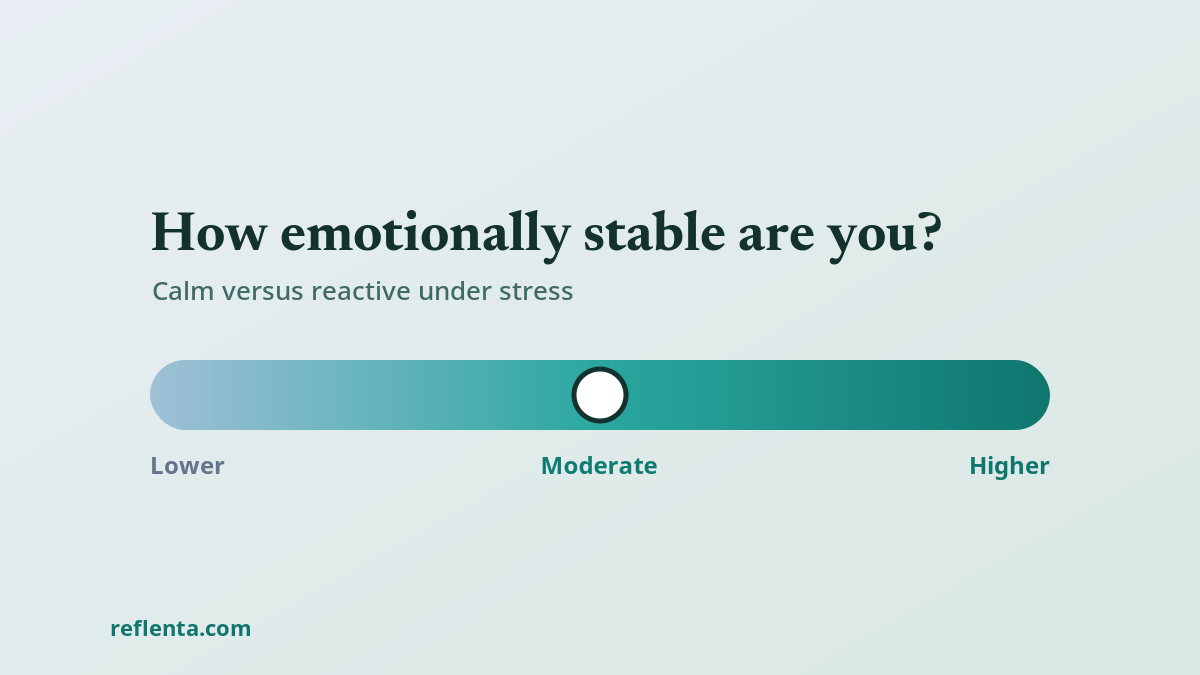
Understanding where you land helps you know yourself better. The free emotional stability test uses specific score bands to categorize your results. These ranges help you see your natural baseline for calmness and reactivity.
If your score falls between 10 and 23, you have lower emotional stability. This means you are likely more reactive. You may feel stress more deeply and take longer to bounce back from difficult moments. This does not mean you are broken. It means your nervous system is highly attuned to change and threat.
A score between 24 and 36 indicates moderate emotional stability. You likely experience a mix of calm and reactivity depending on the situation. You might handle routine stress well but struggle when things feel chaotic. This is a very common range for most people.
Scoring between 37 and 50 suggests higher emotional stability. You are probably calmer and steadier in your reactions. You recover quickly from setbacks and worry less about the unknown. A higher total score means more calm and steadiness in your daily life.
Is High Stability Always Better?
It is easy to think that being perfectly calm is the goal. However, neither end of the trait is better or healthier. High reactivity can mean you are more sensitive to nuance and empathetic to others. People who feel stress intensely often notice details that others miss. They may be more creative or deeply aware of their surroundings.
Conversely, very high stability can sometimes mean less urgency. If nothing stresses you, you might not notice small problems that need fixing. The key is not to change who you are but to understand your triggers. Knowing you are reactive allows you to prepare for it. You can build routines that help you reset when you feel overwhelmed.
When to Seek Professional Help
This test measures a normal personality trait, not a diagnosis. Everyone has a baseline for how they handle stress. However, if your stress, worry, or low mood is affecting your daily life, it is worth talking to a doctor or qualified professional. For example, if you cannot sleep because of worry or if you avoid social situations due to anxiety, that is different from just being reactive.
The goal of the free emotional stability test is to give you a snapshot of your current state. It helps you see if your reactivity is typical for you or if it has shifted. Use this information to be kind to yourself. If you are reactive, give yourself grace. If you are calm, appreciate your steadiness. Both are valid ways to exist in the world.