You walk into a crowded office party. Your friend lights up, scanning the room for someone to chat with, while you quietly find the nearest sofa, grateful for the low corner. This split reaction is not about being rude or overly enthusiastic. It is about where your energy comes from. Understanding this difference helps you stop forcing yourself into social molds that drain you and start building a life that fits your natural rhythm.
One Spectrum, Two Ends
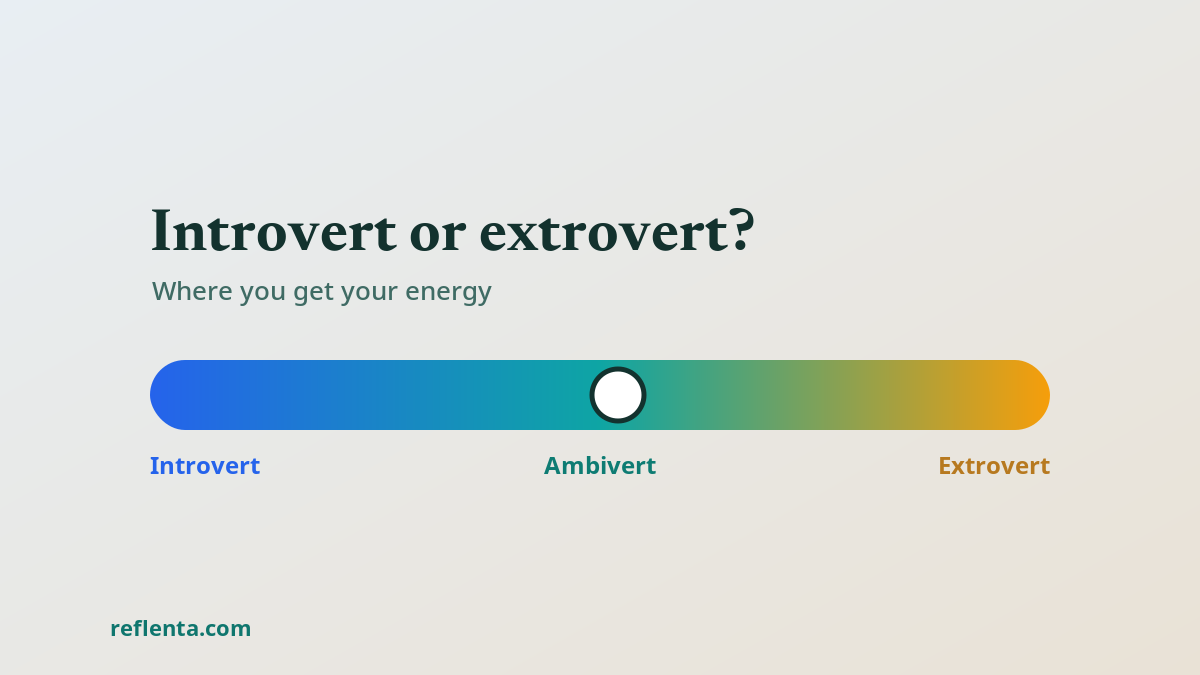
Introversion and extraversion are not two separate boxes you fall into. They are the two ends of one personality dimension called extraversion. This trait is one of the Big Five personality traits, meaning it is a core part of human psychology. Think of it as a slider. Most people are not all the way at either end. Instead, they sit somewhere in the middle, known as ambiverts. These individuals have a mix of both tendencies and can shift depending on the situation. Only a small number of people are extreme introverts or extreme extroverts. Recognizing this spectrum helps you see your own preferences clearly without labeling yourself too rigidly.
Where You Get Your Energy
The core difference between these two types is energy. Introverts tend to recharge with quiet and time alone. A lot of socialising can leave them drained, even if they enjoy the people involved. On the other hand, extroverts are energised by being around people, activity, and stimulation. Too much time alone can leave them restless and bored. This is why an introvert might prefer deep one-on-one conversations to large groups. They often need downtime to recharge after socialising and tend to think before they speak. Extroverts, however, feel energised after being around people. They enjoy meeting new people and busy settings, often thinking out loud as they process their thoughts. Knowing this helps you set up your work and social life in a way that fits you.
Common Myths About Personality
People often confuse introversion with shyness. Shyness is about fear or discomfort in social situations. Introversion is simply a preference for lower-stimulation settings. A person can be a confident, socially skilled introvert who loves parties but needs a nap afterward. Another myth is that extroverts are loud, shallow, or attention-seeking. Extraversion is not about volume; it is about being energised by the outer world. An extrovert can be very thoughtful and quiet when the situation calls for it. These traits are not flaws. They are just different ways of processing the world. Neither end is better or healthier than the other. Each has its own strengths. This is a normal personality trait, not a diagnosis, and it is not a rigid, permanent label. Where you fall can shift somewhat over time and across situations.
Signs You May Lean One Way or the Other
If you often feel exhausted after a day of back-to-back meetings or social events, you may lean introverted. You might prefer working in a quiet office or home environment. You likely value deep connections over broad networks. If you feel restless when you have too much free time and seek out new experiences, you may lean extraverted. You probably enjoy brainstorming with others and thrive in collaborative environments. You do not need to be extreme to fit these descriptions. Many people find they are ambiverts, shifting based on their current needs. Taking a moment to reflect on your energy levels can provide clarity. You can use this insight to design your days so you feel balanced and engaged.
Find Your Place on the Spectrum
Understanding your tendency helps you stop fighting your nature. You can choose environments that support your energy levels rather than depleting them. If you are an introvert, you might schedule quiet hours for deep work. If you are an extrovert, you might seek out team projects and social breaks. You do not have to guess where you stand. You can take a free introvert or extrovert test to get a clearer picture of your preferences. This tool helps you identify your natural inclinations without judgment. It provides a snapshot of where you are right now, acknowledging that your position on the spectrum may shift. Use this knowledge to build a life that works for you, not against you. Whether you lean toward the quiet corner or the busy center, your way of being is valid. You can explore more about your personality by taking the free introvert or extrovert test and discovering how to make the most of your unique traits in your daily life.