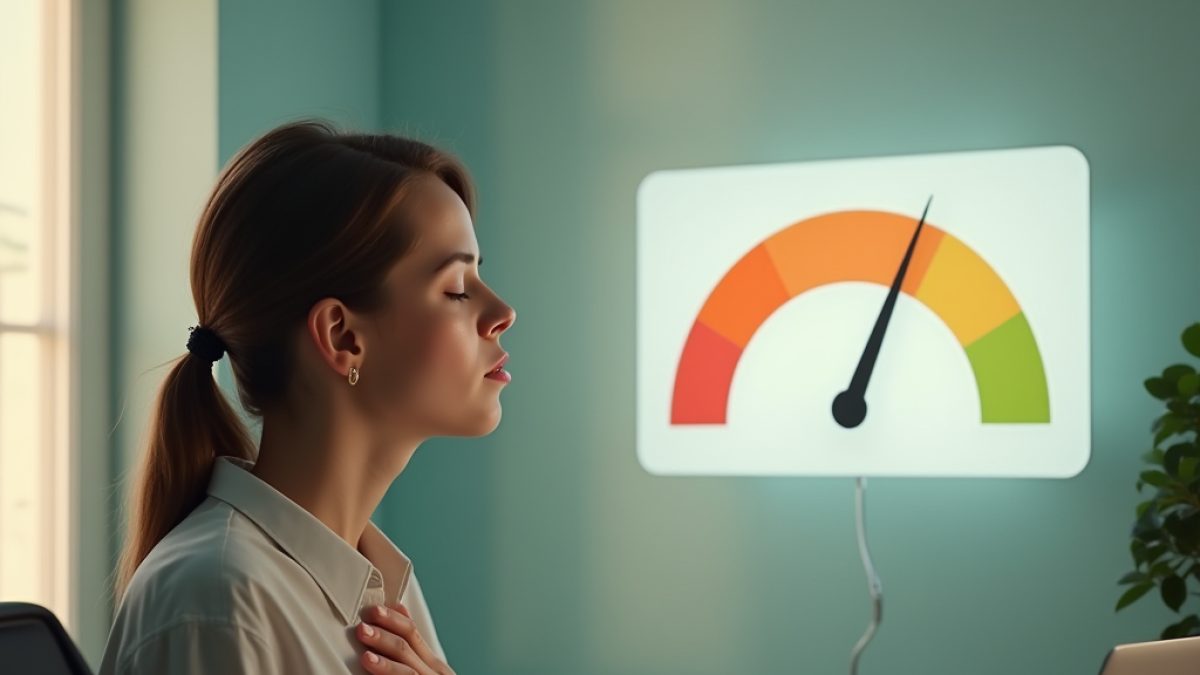
Life feels heavy right now. You might be lying awake at night, snapping at colleagues, or feeling like you are constantly running on a treadmill that never stops. You are not alone in this feeling. Many people experience a similar sense of being overwhelmed, but they struggle to put a name to it.
The free Perceived Stress Scale (PSS-10) helps you measure exactly how unpredictable, uncontrollable, and overloaded your life has felt over the last month. It does not ask about specific events like job loss or a breakup. Instead, it captures how stressed life has felt to you personally.
How the PSS-10 Measures Stress
Cohen, Kamarck, and Mermelstein created this tool in 1983. It remains a standard for measuring perceived stress in educational and non-commercial settings. The test consists of just ten items. You rate each one on a scale from 0 (never) to 4 (very often).
Four of these items are positively worded, meaning they are reverse-scored. This design prevents you from simply checking the same box for every question. The total score runs from 0 to 40. It takes about two minutes to complete, and it is suitable for anyone aged 12 and older.
Your PSS-10 Score Bands
Your total score places you in one of three specific bands. These ranges help you understand your current stress level without diagnosing a disorder.
A score of 0-13 indicates Low perceived stress. If you fall here, your life likely feels manageable. You may still have challenges, but they do not feel overwhelming. You probably have effective coping strategies in place.
A score of 14-26 indicates Moderate perceived stress. You might feel that your demands exceed your resources. This is a common range for people juggling work, family, and social obligations. It is a signal that your coping mechanisms are working but could use some support.
A score of 27-40 indicates High perceived stress. You likely feel that things are out of your control. The weight of your responsibilities feels heavy. This score suggests that your stress levels are high enough to potentially impact your health and daily functioning.
What Your Score Tells You
A score is a screening result, not a diagnosis. It tells you how stressed you have felt, not why. For example, a high score does not mean you have an anxiety disorder. It means your life has felt stressful.
If you score in the high range, look at your workload and your coping strategies. Are you sleeping enough? Are you taking breaks? Consider an anxiety screen such as the GAD-7 if worry is the main problem. This can help distinguish between situational stress and clinical anxiety.
Next Steps After Testing
Use your score as a starting point. If your stress feels unmanageable, talk to a professional. They can help you develop strategies to reduce your perceived stress. You do not need to wait until your score hits the maximum to seek help.
Take the free Perceived Stress Scale (PSS-10) again in a few weeks. Compare your scores. See if your efforts to change your routine are making a difference. Tracking your progress can be empowering.