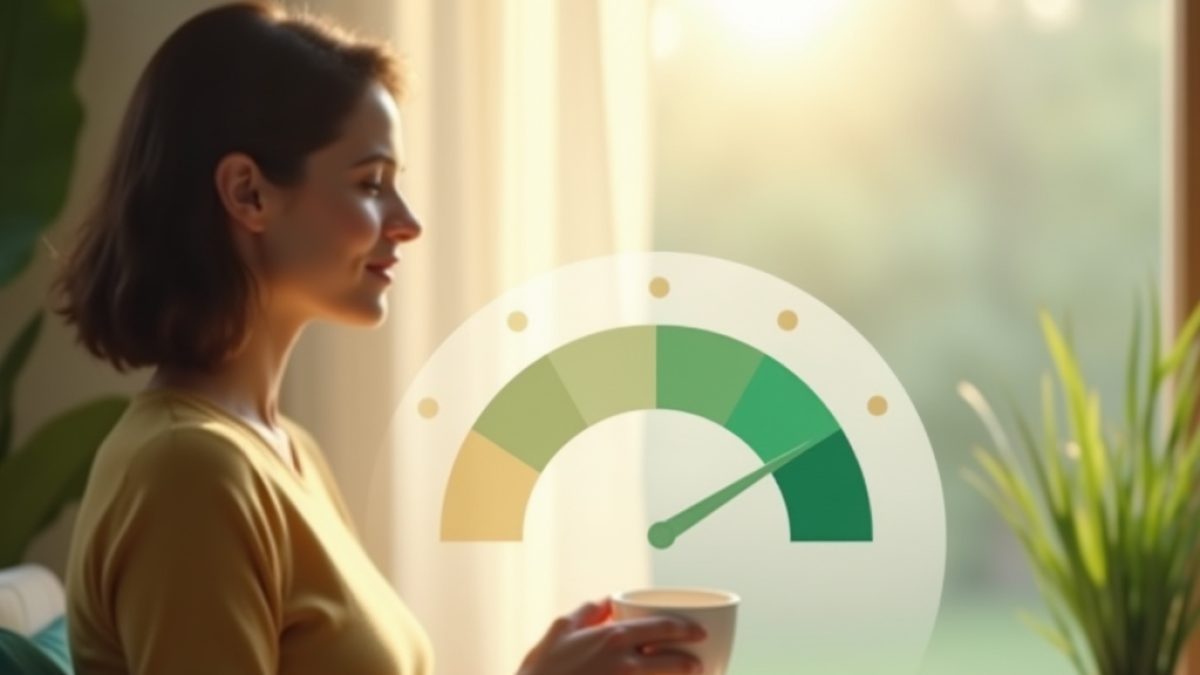
You might feel tired all the time, or you might feel fine but can’t quite put your finger on why. You are not alone in wondering if your mood is just off or something more. The WHO-5 Well-Being Index is a quick, free tool designed to help you answer that question. It takes about one minute to complete and is suitable for anyone aged nine and up.
This brief questionnaire comes from the World Health Organization. It was created in 1998 to measure subjective psychological well-being. Unlike some tests that focus heavily on negative symptoms like sadness or anxiety, the WHO-5 looks at positive states. It asks you to reflect on your positive mood, your vitality, and your everyday interest over the last two weeks.
How the WHO-5 Works
You will rate five positive statements. For each statement, you choose a number from 0 to 5. A 0 means the feeling happened at no time, while a 5 means it happened all of the time. You are essentially measuring how often you felt good, energetic, and interested in life recently.
Once you add up your answers, you get a raw total that ranges from 0 to 25. While some versions multiply this by four to get a percentage, this free WHO-5 Well-Being Index shows your raw total. This number is your screening result. It gives you a snapshot of your current mental state without the noise of other variables.
Understanding Your Score Bands
Your raw score places you into one of three specific bands. These ranges help you understand where you stand right now.
If your score falls between 0 and 7, you have Poor well-being. This suggests you may be struggling with low mood or low energy. If your score is between 8 and 12, you have Reduced well-being. You are in a middle ground where things are not terrible, but you are not thriving either. A score between 13 and 25 means you have Good well-being. You are likely feeling positive, energetic, and engaged in your daily life.
When to Look Closer
A score below 13 is a signal to pay attention. It does not mean you have a clinical condition, but it is a reason to look closer at your mood. Even if your total score is decent, rating any single item as a 0 or a 1 is worth noting. It might indicate that a specific area of your life, like your energy or interest, is suffering.
If you score below 13, consider taking a depression screen like the PHQ-9. This can provide more detail on why you might be feeling this way. Remember, this is educational screening, not a diagnosis. Only a healthcare professional can confirm that. Use these scores to start a conversation with yourself or your doctor.
Next Steps for Your Mental Health
Knowing your score is the first step. If you are in the "Poor" or "Reduced" bands, use that information to check in with yourself. Are you sleeping well? Are you stressed? The WHO-5 is a tool to help you see patterns over time. Retake it in a few weeks to see if your efforts are helping.
You can take the free WHO-5 Well-Being Index right now to get your baseline. Keep track of your results to see how your mental well-being score changes. It is a simple way to monitor your health without the pressure of a clinical setting.